If you have been a victim of medical negligence, it is vital to get legal help quickly. A solicitor can help you file a medical negligence claim and represent you in court if necessary. If you win your case, you may be awarded damages to compensate you for your injuries. Medical negligence can be a complex legal issue, so it is essential to get expert help if you believe you have been a victim of medical negligence.
What is medical negligence?
Medical negligence is a term used to describe any medical mistake that results in injury or death. It can be a very complex legal issue, and it is crucial to get legal help if you believe you have been a victim of medical negligence.
Common types of medical negligence
- medical malpractice (such as bed sores)
- medical misdiagnosis
- surgical errors
- prescription mistakes
- birth injuries
- radiation injuries
Medical Malpractice
Medical malpractice is the most common form of medical negligence and occurs when a healthcare provider fails to provide a standard level of care. This can include misdiagnosis, failure to diagnose, improper treatment, or insufficient follow-up care.
Surgical Errors
Surgical errors can also occur if a doctor or surgeon fails to provide the correct standard of care. This can include operating on the wrong body part, leaving medical instruments in the body after surgery, and performing unnecessary surgeries.
Prescription Mistakes
Prescription mistakes can occur when a healthcare provider prescribes the wrong or incorrect medication dosage. This can result in serious medical complications, including death.
Birth Injuries
Birth injuries can occur if a healthcare provider fails to provide the correct standard of care during labour and delivery. These injuries can include brain damage, cerebral palsy, and broken bones.
Radiation Injuries
Radiation injuries can occur when a healthcare provider fails to provide the correct level of protection during X-ray or radiation treatments. This can result in serious health complications, including cancer.
If you have been a victim of medical negligence, it is important to contact a solicitor as soon as possible. A solicitor can help you file a medical negligence claim and can represent you in court if necessary. If you win your case, you may be awarded damages to compensate you for your injuries.
How can a solicitor help me file a medical negligence claim?
A solicitor can help you file a medical negligence claim by representing you in court and helping you gather evidence to support your case. If you win your case, you may be awarded damages to compensate you for your injuries. It is important to contact a solicitor as soon as possible if you believe you have been a victim of medical negligence, as the process can be complex and difficult to navigate on your own.
What are the chances of winning a medical negligence claim?
Each case is different, and the chances of winning a medical negligence claim depend on the specific facts of your case. However, it is important to get expert legal help if you believe you have been a victim of medical negligence. A solicitor can help you navigate the complex legal process and give you the best chance of success.
What are the potential consequences of medical negligence?
Medical negligence can have serious consequences for both the victim and their family. Some of the potential consequences of medical negligence include:
- Injuries
- Death
- Financial losses
- Emotional trauma
If you have been a victim of medical negligence, it is important to seek legal help as soon as possible. A solicitor can help you file a medical negligence claim and can represent you in court if necessary. If you win your case, you may be awarded damages to compensate you for your injuries.
How do I know if I have been a victim of medical negligence?
If you have been a victim of medical negligence, it can be difficult to know if you have a case. However, several things to look out for may indicate that you have been a victim of medical negligence. Some of the signs to watch out for include:
- Injuries that were not caused by accident or natural causes
- Errors in medical treatment or diagnosis
- Unreasonable delays in medical treatment
- Hospital-acquired infections
If you have any of these symptoms, it is important to contact a solicitor as soon as possible. A solicitor can help you file a medical negligence claim and can represent you in court if necessary. If you win your case, you may be awarded damages to compensate you for your injuries.
What should I do if I think I have been a victim of medical negligence?
If you think you have been a victim of medical negligence, there are several things you can do to protect your rights. Here are some tips:
- Seek medical attention for your injuries.
- Gather evidence to support your case. This includes medical records, witness statements, and photographs of your injuries.
- Keep a journal of your injuries and how they have affected your life.
- Contact a solicitor as soon as possible. A solicitor can help you file a medical negligence claim and can represent you in court if necessary.
If you have been a victim of medical negligence, it is important to take action to protect your rights. Contact a solicitor as soon as possible and gather evidence to support your case. Seek medical attention for your injuries and keep a journal of how they have affected your life. With the help of a solicitor, you can get the compensation you deserve for the injuries you have suffered.
How long will my medical negligence case take?
Medical negligence cases can take a long time to resolve. The process can be complex and challenging to navigate on your own, so it is crucial to have a solicitor represent you. A solicitor can help you gather evidence to support your case and can represent you in court if necessary.
If you win your case, you may be awarded damages to compensate you for your injuries. We’ve written a specific article about how long medical negligence claims can take.
What are the costs associated with filing a medical negligence claim?
The cost of filing a medical negligence claim can vary depending on the hired solicitor. Generally, there will be a consultation fee, and the solicitor will take a percentage of the final settlement as payment. Other expenses may be involved, such as court fees and medical reports. It is important to discuss all of the costs involved with a solicitor before hiring them.
Conclusion
If you are a victim of medical negligence, it is important to seek legal help as soon as possible. Medical negligence can be a very complex issue, and it is important to have an experienced solicitor on your side.
At Alan Curtis Solicitors, we have years of experience helping victims of medical negligence get the compensation they deserve. We understand what you are going through and will do everything we can to help you get justice. Contact us for a free consultation today, and let us help you fight for what you deserve.
]]>A pressure sore, or decubitus ulcer, is a zone of damaged skin and tissue that forms when a person stays in one position for an extended period without moving. This can happen when a person is bedridden, has limited mobility, or cannot change position due to a disability or medical condition. Pressure sores are typically found on the bony body areas, such as the heels, ankles, tailbone and hips. Pressure sores are caused by the body’s pressure against a bed or chair and can be painful and take a long time to heal.
How is a bed sore different from a pressure sore?
The term ‘bed sore’ is used when a decubitus ulcer (pressure sore) forms due to prolonged periods in a bed. The term bed sore is often used because being bed-bound is the most common cause of pressure sores, usually due to extended stays in hospitals or care homes.
What to do if you think you have a bed or pressure sore
Routine care can prevent bed and pressure sores by regularly moving and repositioning the body, keeping the skin clean and moisturized, and using protective devices, such as pressure-relieving cushions or mattress overlays. It is vital to seek medical attention if you suspect that you or somebody close to you might have a bed sore or pressure sore, as early treatment can help prevent the sore from getting worse and reduce the risk of infection.
If you or a loved one has suffered from a bed sore or pressure sore due to medical negligence then you may be entitled to compensation. Check out our making a claim for a bed sore injury page or how long a medical negligence claim could take to learn more.
This blog post will provide an overview of the entire process, from start to finish. We will also discuss some of the factors that can affect how long your claim takes. So if you are considering making a medical negligence claim, read this post!
What is a medical negligence claim, and what does it cover?
A medical negligence claim is a legal action against a healthcare professional or organisation used to seek compensation for injuries or damages caused by their negligence.
Some things medical negligence claims cover:
- Bed sores (pressure sores)
- Delayed diagnosis
- Misdiagnosis
- Birth injuries
- Care home negligence
- Incorrect surgery
What is the process in the UK to make Medical Negligence Claim:
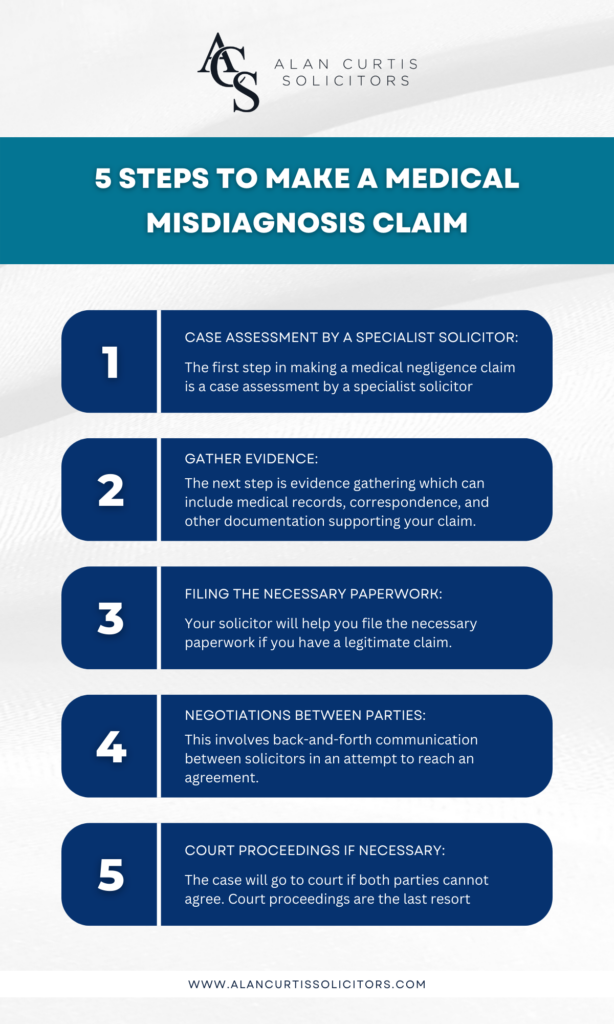
Step one – case assessment
The first step in making a medical negligence claim is a case assessment by a specialist solicitor. They will look at your circumstances and decide whether or not you have a valid lawsuit. If they believe you do, they will take on your case and start gathering evidence.
Most solicitors will provide free case assessments. If you’d like us to consider your case, use the form on our contact page or medical negligence page, and we’ll get back to you promptly.
What happens during a case assessment?
Your solicitor will ask you about the facts of your case, what happened and where.
Step two – Medical Records:
The next step is evidence gathering which can include medical records, correspondence, and other documentation supporting your claim. Once you have this information, you’ll need to submit it to your solicitor for review.
Good medical negligence solicitors will have access to medical experts who will provide medical reports, giving the solicitors more insight into how the negligence occurred and who was at fault.
Step three – Starting the claim:
Once the evidence is gathered and the medical professionals have reviewed your case, your solicitor will help you file the necessary paperwork if you have a legitimate claim. This will start the legal process and allow your solicitor to gather evidence from the other party. The other party will legally have 21 days to respond to your claim.
Step four – Negotiations:
Your solicitor will contact the other party to start negotiation proceedings. This involves back-and-forth communication between solicitors in an attempt to reach an agreement.
Step five (if necessary) – Court proceedings:
The case will go to court if both parties cannot agree. Court proceedings are the last resort and are usually only necessary if the other party denies liability, or there are significant disagreements about how much compensation is owed.
The court process can take many months, or even years, to complete. However, your solicitor always aims to resolve medical negligence claims without court proceedings.
Step six – Payout:
If your claim is successful, you will receive a final settlement from the other party. The amount of claim compensation you receive will depend on the severity of your injuries and their impact on your life.
Some solicitors might also claim interim payments based on damages and expenses, which can help your cash flow during the case. Interim payments can’t always be claimed for and are usually only considered during a longer claims process.
Making a medical negligence claim can be a long and complex process. However, with the help of a specialist solicitor, you can ensure that your claim is handled correctly and efficiently.
Factors affecting how long your claim will take:
Solicitors will always try to avoid long medical negligence claims where possible.
How long it takes to gather evidence:
Gathering evidence can be the longest part of the process as it can take time to get your records and other documentation.
Case complexity:
Every case is different, and some are more complex than others. Many factors can make a case more complicated, including:
- The number of parties involved
- The severity of the injuries
- Whether there is a dispute about who was at fault
- Whether the other party denies liability
The severity of your injuries:
If you have suffered severe or life-changing injuries, your claim will likely take longer than if your injuries are minor. This is because more evidence will be required to support your claim, and negotiations will probably be more complex.
The other party’s response:
If the other party denies liability, your claim will take longer as more evidence might need to be gathered to prove their negligence.
Whether or not you go to court:
Most claims get resolved without going to court; however, if your case goes to court, it could take many months or even years to reach a decision.
How long does a medical negligence claim take?
The average medical negligence claim takes between nine and twelve months from the initial case assessment to a compensation settlement. However, some claims can take longer, depending on the abovementioned factors.
How can I get expert legal advice for medical negligence claims in the UK?
There are many medical negligence experts in the UK. To find one near you, search for ‘medical negligence solicitor’ online.
When you seek legal advice, it’s essential to choose a solicitor who has experience dealing with similar cases to yours and is regulated by the Solicitors Regulation Authority. An experienced solicitor will increase your chances of success and help ensure your claim gets handled efficiently.
Alan has over 25 years of experience winning medical negligence cases. With a friendly and knowledgeable team of solicitors and medical specialists, Alan can help you to get the compensation you deserve. You can find out more about our medical negligence service here, and don’t forget we always offer free case assessments and legal advice.
]]>If you or a loved one has been the victim of medical negligence, you may be wondering what your next step should be.
We’re here to help you understand Medical Misdiagnosis and what to expect when you make a misdiagnosis claim. We’ll explain the common types of medical misdiagnosis and the most commonly misdiagnosed conditions. Finally, we’ll look at the steps you can take to make a medical misdiagnosis claim.
If you believe you have suffered due to a misdiagnosis, it is important to speak to a solicitor as soon as possible. In this blog post, we will discuss medical misdiagnosis claims and what you need to know to make a successful claim.
Medical misdiagnosis claims can be complex, so it is important to have a solicitor on your side who understands the law and can help you to navigate the process.
If you would like to speak to one of our specialist medical negligence solicitors about making a claim, please get in touch. We offer free initial consultations, during which we will assess your case and advise you on the best course of action. We understand how difficult this time may be for you, and we will do everything we can to help you get the compensation you deserve.
What is Medical Negligence?
Medical negligence is when a medical professional provides substandard care that results in injury or death.
Types of medical negligence:
There are many different types of medical negligence, but some of the most common include:
- Misdiagnosis
- Delayed diagnosis
- Surgical negligence
- Anaesthesia negligence
- Failure to diagnose
- Wrong treatment
- Delay in treatment
- Medication errors
- Dental negligence
- Pregnancy and birth negligence
The two main types of Medical Misdiagnosis:
Late/Delayed Diagnosis:
This is when a medical professional does not diagnose a condition quickly enough. This can result in the condition becoming worse, and the patient may even die as a result.
Missed/Incorrect Diagnosis:
This is when a medical professional incorrectly diagnoses a condition or misses it altogether, which can have serious consequences for the patient, as they may receive the wrong treatment or no treatment.
What is Medical Misdiagnosis?
Medical Misdiagnosis is when a medical condition is incorrectly diagnosed. This can happen if a doctor fails to order the correct tests, misinterprets test results, or does not consider all of the possible diagnoses. Misdiagnosis can have serious consequences, as it may delay treatment or lead to unnecessary and invasive procedures.
Which conditions are most typically misdiagnosed?
There are many conditions that can be misdiagnosed, but some of the most common include:
- Cancer misdiagnosis
- Heart attack
- Diabetes
- Blood clot
- Infection
- Meningitis
- Stroke
- Ectopic Pregnancy
- Broken Bones
- Epilepsy
Medical Misdiagnosis compensation: How much compensation could you be entitled to?
The amount of compensation you could receive will depend on a number of factors, including the severity of your injuries, the impact on your quality of life, and any financial losses you have incurred.
At Alan Curtis Solicitors we have dealt with medical negligence claims with payouts ranging from a few thousand pounds to cases winning over 1 million pounds in compensation.
For more accurate information on how much you could be entitled to please feel free to get in touch with our specialist medical misdiagnosis solicitors by filling out this form.
How much time do I have to make a claim?
There is a strict time limit for making a medical misdiagnosis claim, so it is important to seek legal advice as soon as possible. In most cases, you will have three years from the date of your injury or diagnosis to make a claim.
The only exception is for children under the age of 18 where no time limit applies. However, as soon as the child turns 18 the three-year limit comes into effect.
How do I know if I have a Medical Misdiagnosis Claim?
If you or a loved one has been the victim of medical misdiagnosis, you may be wondering what your next step should be.
Due to the legal complexities involved in medical misdiagnosis cases, it is important to speak to a solicitor who has experience in this area. They will be able to assess your case and advise you on the best course of action. You can find our misdiagnosis service page here if you would like any further assistance.
How do you prove medical misdiagnosis has occurred?
In order to prove that medical negligence has occurred, we will need evidence that the healthcare professional in question breached their duty of care. This means that they did not provide the standard of care that a reasonable person would expect in the circumstances.
Common evidence for medical misdiagnosis includes:
- Being referred to the wrong specialist
- Failing to do a proper examination
- Incorrect reading of your test results
- Failure to acknowledge your symptoms or not believing your description of your symptoms.
- Not taking your medical history into account
- Not conducting the correct tests
- Not considering all possible diagnoses
- Disregarding test results
- The doctor delayed correctly diagnosing
What to expect before, during and after a Medical Negligence Claim:
Making a medical misdiagnosis claim can be a daunting process, but our team of experienced solicitors will be with you every step of the way.
Before we start your claim, we will need to obtain your medical records and carry out an investigation into the circumstances surrounding your case. We will then need to obtain expert evidence to support your claim.
Once we have gathered all the necessary evidence, we will write to the hospital or GP responsible for your care and give them an opportunity to apologise and offer a settlement. If they do not respond or if we are not able to agree on a settlement, we will then proceed to court.
Although the majority of cases are settled outside of court, it is important to be prepared for the possibility of going to trial.
The final stage of the process is negotiating a settlement with the other side. Once we have agreed on an acceptable figure, the court will then issue an order for payment.
No Win No Fee Medical Misdiagnosis Claim
Not all solicitors offer a no win no fee service for medical misdiagnosis claims.
At Alan Curtis Solicitors we work on a No Win No Fee basis, which means that you will not have to pay any legal fees unless we win your case. This means that you can make a claim without worrying about how you will pay for legal fees. You can find out more about our no win no fee service here.
]]>Yes, you can die from a bedsore. Infection is the most common cause of death from a bedsore.
The pressure from lying in one position for too long cuts off circulation to the skin and underlying tissues. This allows bacteria to get into the tissue and cause an infection. If not treated, the infection can spread throughout the body and be life-threatening.
Factors that increase the risk of developing a bedsore include being elderly, having a chronic illness, being immobile, incontinence, and poor nutrition. Burns, radiation therapy, and severe trauma can also lead to an increased risk of developing a bedsore. Proper care is important in preventing or treating bedsores.
What are bedsores?
Bedsores, also known as pressure ulcers, are extremely painful and can be life-threatening. They can cause infections and lead to death in a worst-case scenario.
What are the signs of bedsores?
It’s essential to know the signs of a bedsore, so you can get help right away if one appears on yourself or a loved one.
Signs that may indicate bedsore:
- Reddened, swollen, or warm skin
- An open sore or blister that drains pus or other fluids
- A deep crater in the skin
- Blackened or dead skin
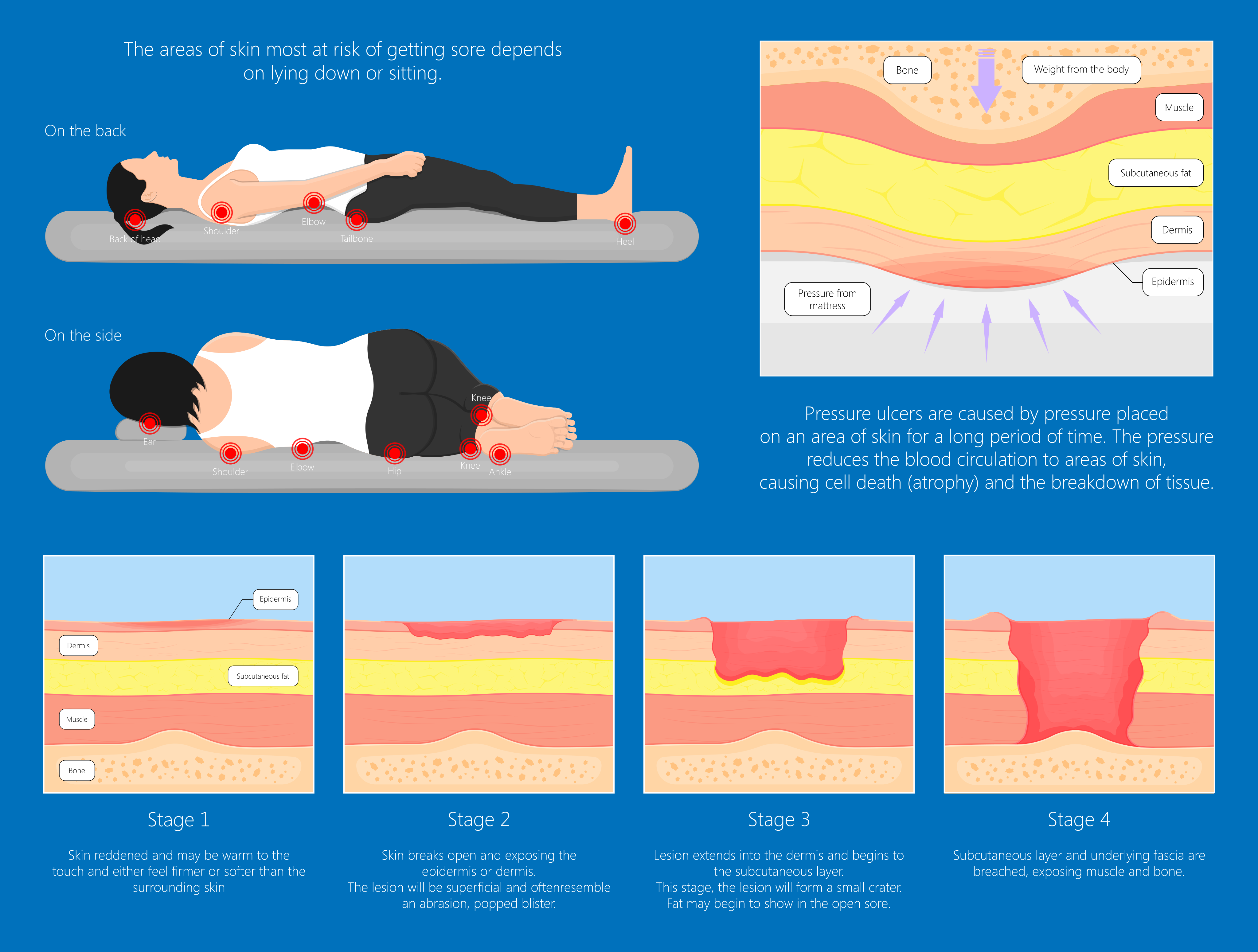
If you see any of these signs, it’s essential to seek medical help. Bedsores can progress quickly and can be life-threatening if left untreated. Don’t wait to see if the sore goes away on its own. Get help from a medical professional as soon as possible.
How to Prevent Bed Sores
If you’re caring for someone at risk of developing bedsores, it’s vital to take steps to prevent them from happening. Here are a few tips for preventing bedsores:
- Change the person’s position frequently
- Use a pressure-relieving mattress or pad
- Keep the person’s skin clean and dry
- Don’t let the person sit or lie in one position for too long
- Inspect the person’s skin regularly for any signs of redness or soreness
By following these tips, you can help prevent bed sores from developing. But even if you take all the necessary precautions, bed sores can still happen.
What to do if you have a bed sore
If you have a bed sore, there are a few things you can do to help it heal:
- Clean the sore with mild soap and water
- Apply an antibiotic ointment to the sore
- Cover the sore with a sterile bandage
- Keep the area around the sore clean and dry
- Change your position frequently to relieve pressure on the sore
If you have a bed sore, it’s important to take care of it right away. If you don’t treat a bed sore, it can become infected and lead to serious health problems. So if you think you might have a bed sore, don’t wait to see if it goes away on its own. Get medical help right away!
Who is most likely to get bedsores?
Bedsores can happen to anyone, but they’re most common in people who cannot move on their own. Here are some of the most common risk factors for developing bed sores:
- Being bedridden
- Having paralysis
- Delicate or thin skin
- Diabetes
- Poor diet
- Low body fat
- Damaged skin
- Cold Skin
If you or a loved one fall into any of these categories, it’s critical to be extra vigilant about preventing and treating bed sores.
Can Bedsores be healed?
With proper treatment, most bedsores can be healed without any lasting damage. But if they’re left untreated, bedsores can lead to serious health problems, including infection and death.
If you have any concerns about a bed sore on your loved one, don’t hesitate to reach out to a medical professional for help. Don’t let a bed sore become a severe health hazard. Seek treatment right away if you see any signs of one.
What happens if a bedsore becomes infected?
Infection is the most serious risk for a patient with a bedsore! If a bedsore becomes infected, it can lead to sepsis which can be life-threatening.
A septic infection is caused by bacteria entering the body through broken skin or tissue. If a septic infection spreads throughout the body, it is a medical emergency that requires immediate treatment.
One type of bacteria called methicillin-resistant Staphylococcus aureus (MRSA) causes many hospital infections because it’s resistant to many common antibiotics. If a patient with a bedsore contracts MRSA, it can be challenging to treat.
How can I tell if a bedsore is infected?
- The sore is getting worse
- The area around the sore is red and swollen
- Pus or other drainages from the wound
- Fever
- Bad smell from the wound
- Nausea
- Vomiting
- Confusion
- Increased heart rate
- Heavy breathing
Conclusion: Can you die from a bedsore?
Yes, you can die from a bedsore if it becomes infected and leads to sepsis. That’s why it’s so important to seek medical help right away if you think you or your loved one has a bed sore!
If caught early, most bedsores can be healed without any lasting damage. But if they’re left untreated, they can lead to serious health problems. So don’t wait to get help if you see any signs of a bed sore. Seek medical attention right away!
If you feel you or a loved one has suffered from a bedsore caused by medical negligence, get in touch with our specialist claim team here. You could be entitled to up to £40,000 in compensation.
]]>Bed sores in hospitals are an often overlooked condition that affects between 4% and 10% of people in hospitals in the UK. Yearly, around 186,617 develop one or more bed sores during a stay in Hospital.
Bed sores are not typically life-threatening, but they can significantly negatively impact the quality of your life and well-being while you are hospitalised. So what’s the solution? Is there such a thing as being completely free from developing a bed sore?
This article will discuss how a patient can develop and prevent bed sores in a hospital. I hope you find the information here helpful. Please leave feedback in the comments below, and feel free to share examples of your bed sore stories with us.
What are bed sores?
A bed sore is a skin ulcer caused by someone lying in the same position for long periods.
Bed sores can take many forms, ranging from small red spots on the skin to deep ulcers with exposed bone or tissue beneath them. Some people have only one or two localized areas where they experience discomfort; others may have multiple lesions spread across their bodies.
Bed sores are a common problem for people in hospitals or other long-term care facilities. They’re also a risk factor for residents of nursing homes and assisted living facilities and people at home with family members who may be unable to help them as much as they need.
Common names for bed sores
There are many different terms commonly used for Decubitus Ulcers in the UK.
Decubitus ulcers
Decubitis Ulcer is the medical term for a bed sore. ‘Decubitus‘ refers to the position someone lies while in bed. ‘Ulcers’ are sores that are slow to heal, can take many forms and occur on the skin or inside the body.
Bed sores
Bed sore is the most common term for Decubitus Ulcers in the UK. However, it’s important to note that bed sores can also be caused by prolonged pressure from sitting in a chair or wheelchair.
Pressure sores
Pressure sore is another common term for Decubitus Ulcers in the UK.
Bedsores
You will sometimes see bed sores written as bedsores with no space.
Pressure ulcers
Again, a pressure ulcer is a common term in the UK, but typically not as common as ‘bed sore’ or ‘pressure sore’.
Pressure injuries
Probably the least commonly used term for a Decubitus Ulcer in the UK.
The four stages of bed sore development
Stage One
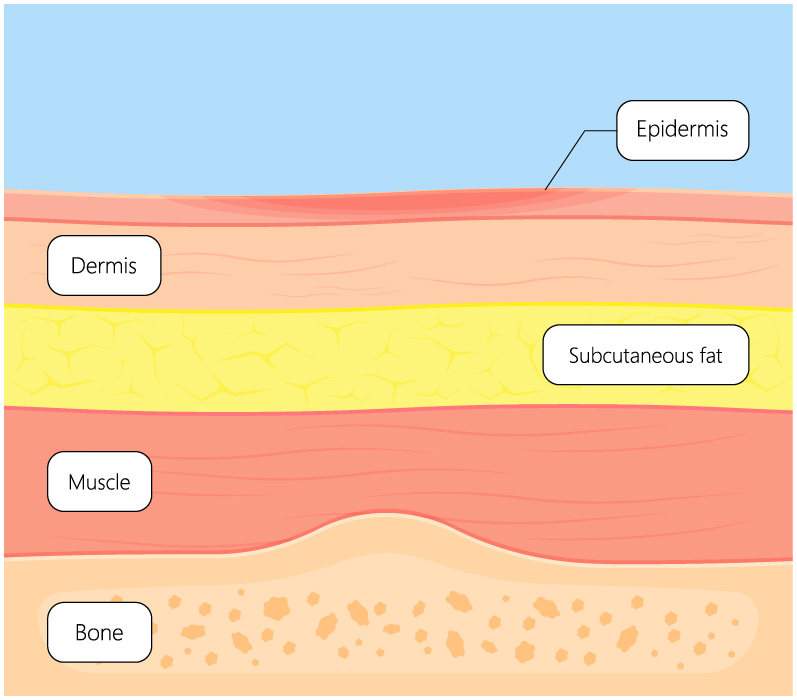
Skin reddened and may be warm to the touch and feel firmer or softer than the surrounding skin.
Stage Two
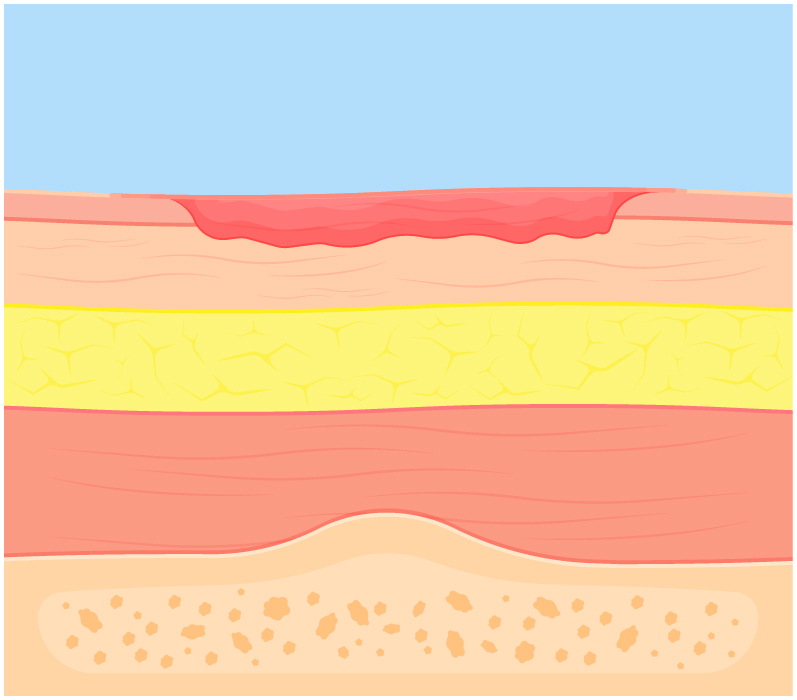
Skin breaks open and exposes the epidermis or dermis. The lesion will be superficial and often resemble an abrasion or popped blister.
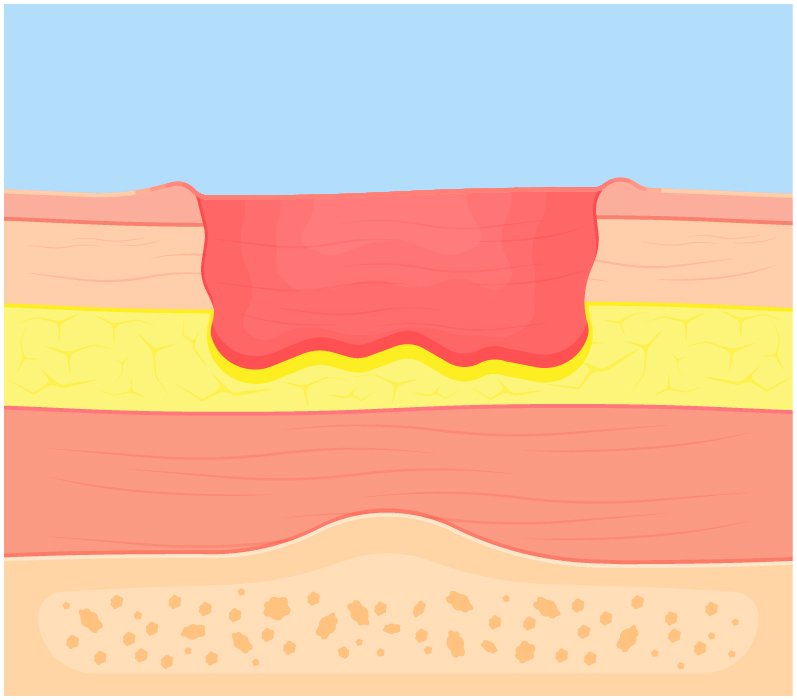
Stage Three
The lesion extends into the dermis and spreads to the subcutaneous layer. At this stage, the lesion will form a small crater. Fat may begin to show in the open sore.
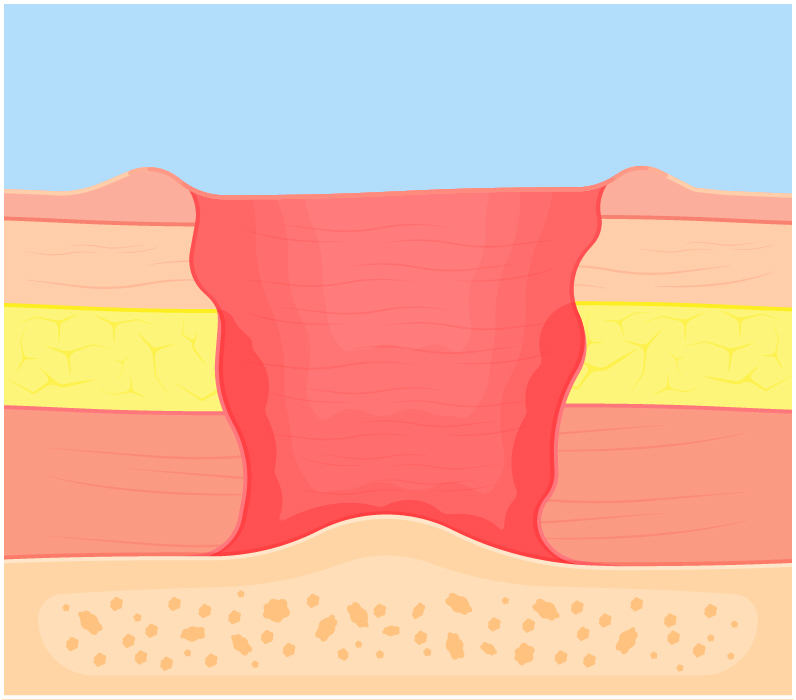
Stage Four
The subcutaneous layer and underlying fascia are breached, exposing muscle and bone.
How might you develop bed sores in Hospital?
To get a bed sore, you need to be in a position where your weight is on one part of your body (usually your bottom or hips) for an extended period. Bed sores can happen if you stay in one position for too long, like if you’re bedridden or sitting up all day with no breaks.
Some people have a higher risk of developing pressure ulcers. Age, diet, hydration and certain medical conditions can cause a greater risk of developing a bed sore. We’ll talk more about specific risk factors later.
Hospitals and Care Homes have a duty of care for their patients and can be liable if their patients develop pressure ulcers while in their care. Typically, you can make a legal claim if the pressure ulcer is stage three or higher.
Parts of the body that are most commonly affected
Certain body areas are more likely to develop pressure ulcers, so checking them regularly when sitting or lying down for prolonged periods is essential.
It’s typically a boney area that is most likely to develop a pressure sore, especially if it supports your weight. Here’s a list of the most likely places for sores to develop:
- Buttocks (tailbone)
- Hips
- Heels of feet
- Shoulder blades
- Backs and sides of knees
- Back of the head
How serious are bed sores?
You can die from bed sores if not treated promptly. The most significant risk factor for a pressure ulcer becoming life-threatening is infection. Thankfully, life-threatening complications from pressure ulcers are infrequent.
However, the tissue damage caused by pressure ulcers can be debilitating and cause significant pain.
Pressure ulcers need to be treated promptly and professionally to ensure a healthy recovery and prevent the ulcer from developing further.
Top Tip: Make sure you take photos and keep a diary of the bed sore(s) development if you or a loved one develops a bed sore while under the care of a medical professional. This evidence will be vitally important if you make a legal claim.
Bed sore risk factors
Several factors increase the likelihood of developing a pressure sore. Knowing the risk factors enables you to assess your risk. If you believe you are at risk of developing pressure ulcers while in the hospital, talk with your doctor or health care professional about minimising your risk.
Prolonged pressure
Prolonged pressure is the leading risk factor for developing pressure ulcers. When the skin has pressure applied over a long time, the blood supply gets cut off, allowing pressure sores to form.
Poor nutrition
Poor nutrition can lead to bed sores. Patients who are malnourished and have a poor diet, or patients who have a poor diet because they’re in the hospital, are at risk of developing pressure ulcers.
Bony areas
Bed sores are more likely to develop on bony body areas, such as the heels, ankles, hips, elbows, and shoulders. These areas don’t have much fat to protect them from pressure. We recommend that you use pressure relief cushions for these areas whenever possible.
Elderly patients
Elderly patients are more likely to develop bed sores because their skin is more fragile, and they have less body fat than younger patients (which means they’re more likely to experience pressure). There’s also an increased risk of infection in elderly patients due to weakened immune systems.
Body fat
The less body fat someone has (even if they’re not underweight), the more likely they’ll develop bed sores—that’s because fat cushions against pressure on your skin which helps prevent damage from occurring underneath it.
Fragile skin
Fragile skin is another factor that makes it easier for bed sores to develop. If your skin is thin or damaged from an injury, it will take longer for wounds to heal and may become infected more easily.
Cold skin
Cold skin also increases your risk of developing pressure ulcers because it does not have enough warmth or moisture for healing tissue.
Diabetes
People with diabetes are particularly at risk for developing these painful wounds because of their decreased circulation and increased pain sensitivity. Diabetes can also impair the body’s ability to heal from skin damage, so good aftercare is vital for minimising the risk of infection.
Preventing pressure ulcers
Let’s take a look at some ways that you could avoid bed sores.
Change position
You should change your position every hour or two to prevent pressure sores. This will help keep your skin healthy and moisturized. It also helps with circulation and prevents muscle aches and numbness.
Healthy diet
A healthy diet is another essential part of preventing pressure sores; eating well helps keep your skin healthy and supports your overall health. Eating healthily reduces the likelihood of fatigue or other symptoms that could make staying comfortable difficult (like nausea). Ensure you’re eating plenty of fruits and vegetables and fibre-rich foods.
Make sure your diet includes plenty of vitamin C and omega-3 fatty acids. These nutrients help keep your skin healthy and elastic.
Drink water
Water helps keep your body hydrated and healthy overall, reducing the risk of developing a pressure sore or similar problems associated with immobility, like deep vein thrombosis (DVT). Dehydration can cause blood vessels to become constricted and lead to poor circulation.
You may want to try drinking an electrolyte-balanced beverage like Gatorade or coconut water for the extra mineral and hydration benefits!
Reduce pressure
Ensure you have enough padding under your body, so it doesn’t rest directly on a hard surface. This includes pillows and mattresses with sufficient support for different parts of your body (such as hips/shoulders) while sleeping or sitting upright.
Use proper body positioning to help spread your weight and support your entire body. Ask your doctor or nurse practitioner to show you how to learn more about doing this!
Healthy skin
Wash daily with mild soap and warm water; pat your skin dry gently with a towel instead of rubbing vigorously. Clean skin will reduce the risk of infection and keep your skin hydrated.
It’s essential to ensure you’re getting plenty of vitamin D, as this is one of the essential vitamins for healthy skin. Vitamins C, E and K also play a vital role.
Sleep
It seems a bit counterintuitive when you consider maintaining the same position for long periods can cause pressure ulcers. However, sleep is vital for our body’s ability to heal. Ask your nurse to help you turn at night to reduce your risk of developing sores.
Risk Assessment
If you’re at risk of developing bed sores, your caregiver should provide a risk assessment with actionable steps to reduce your risk of developing a bed sore. The risk assessment should include instructions that hospital staff must follow to reduce the likelihood of you developing a pressure ulcer.
Check in with your caregiver regularly to ensure they’re checking for sores and changing dressings as needed.
If you develop pressure sores while in the hospital and your caregivers did not follow your risk assessment, you may be entitled to compensation. Make sure you keep records of the care you’re being provided and when your bed sores develop.
Who is responsible for preventing pressure ulcers while in Hospital?
Preventing bed sores is a team effort; everyone is responsible. While in a hospital, the primary responsibility lies with your care professionals, usually your nurses and doctors.
However, you are also responsible for following your caregiver’s instructions and providing them with accurate information about your health. If you’re unhappy with the care you receive while in the hospital, contact your local GP and record your concerns.
Treating bed sores
If left untreated, bed sores can become a very serious problem and even, in rare cases, lead to death (caused by the spread of infection). Here are some tips to help you treat mild bed sores – but make sure you also consult your doctor and follow their instructions.
Pressure sores are treated by protecting the skin from further damage and cleaning and dressing the wound. Pressure sores often take a long time to heal, which can be painful.
You should first check the skin for open wounds and pus to treat a pressure sore. If there is pus drainage, you should clean the skin with soap and water and apply antibiotic ointment to prevent infection. If there is any movement around the wound area, you should use a soft gauze bandage or other dressing.
Contact your doctor immediately if the sore is not healing, getting worse, or causing pain. They can prescribe antibiotics and stronger pain medication. Sometimes further professional medical intervention may be necessary, like removing dead tissue.
Making a medical negligence claim for a bed sore
If your bedsore has developed to stage three or greater you might be able to claim compensation for your bed sore injury. If you would like to learn more about the process of making a medical negligence claim, we have an article called how long does a medical negligence claim take, where you can learn more about the ins and outs of medical negligence claims.
We have a team of compassionate medical negligence and bed sore experts ready to help you out if you would like to make a claim. Feel free Get in touch with us if you want a free claim assessment.
]]>